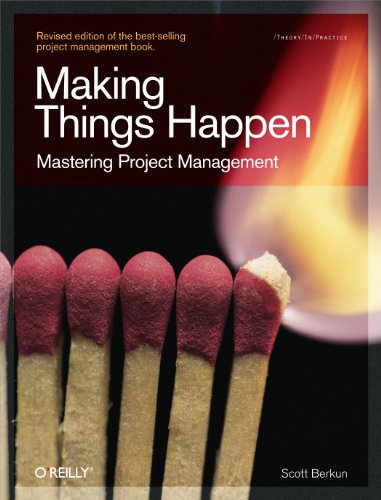

Scott Berkun offers a great excerpt from his book Making Things Happen. He views project management as basically managing priorities:
- Everything can be represented in an ordered list. Most of the work of project management is correctly prioritizing things and leading the team in carrying them out.
- The three most basic ordered lists are: project goals (vision), list of features, and list of work items. They should always be in sync with each other. Each work item contributes to a feature, and each feature contributes to a goal.
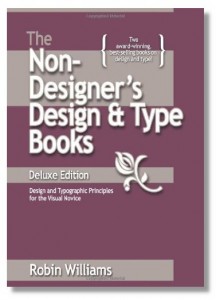
 This is a decent overview of graphic design and layout. Everybody who has to design a poster, web page or invitation should read it. And that’s no chore, because it’s an easy and fun read.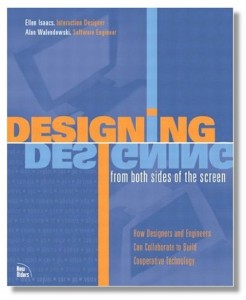
 How do you design interface elements that most users don’t use, but some users use all the time? And what about functions that are used by everybody, but only a few times? The answer depends on the context, but Ellen Isaacs and Alan Walendowski’s book Designing from Both Sides of the Screen has a useful set of guidelines. It’s a handy initial approximation to aid your design thinking.
 The title of this book describes the web application design strategy presented within. Hoekman calls it the
 This is a passionate polemic on the dark side of rampant software technology. But it also shows a way out, and that is (cue celestial choirs) Interaction Design.
 This is an overview of the entire world of user experience (UX) design from the point of view of a dedicated UX practitioner. It covers the UX side of project management, client interaction, design, development, and testing. Despite the broad coverage, its focus on the practitioner means it goes into a bit more depth than many such books.
 This simple book is worth reading for its mindset rather than for any concrete ideas. Maeda gives ten “laws” of simplicity, but they’re really pretty arbitrary. The tenth law is just a slogan (although a good one), and there are three extra laws at the end. Clearly he was intent on having ten laws in his list.
 To mark
 Forms That Work is a practical book dedicated to making web forms usable and useful. It gathers a heap of information together, with helpful summaries and guidelines to make it easy to create web forms that people will actually use.
 I read this good short guide to writing for the web a year or two ago. Even though the book is a few years old now, its advice is still relevant: Web technologies change quickly, but the rules for good web writing are the same now as they were when the web was new.