Last month I attended Adobe’s Refresh 2012 event. This is a roadshow where they present highlights from the current and upcoming product line for designers and developers. They talked about the future of Flash and their product strategy, and they showed some very neat tools. Continue reading “Adobe Refresh 2012” →
Posts Tagged: design
The Non-Designer’s Design & Type Books — Robin Williams
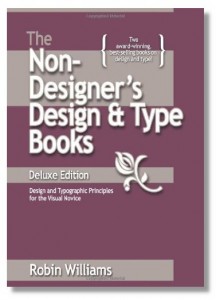

This book is an updated compilation of two of Williams’s previous books: The Non-Designer’s Design Book and, unsurprisingly, The Non-Designer’s Type Book. The first half is about design. Williams presents four fundamental layout concepts: Proximity, Alignment, Repetition, Contrast. (I list them in this order because PARC is a better acronym than the reverse.) Most of the rest of this part consists of elaborations and applications of these basics. Continue reading “The Non-Designer’s Design & Type Books — Robin Williams” →
The Laws of Simplicity — John Maeda

Here’s my interpretation of the laws:
Thoughtful reduction yields simplicity.
Organisation makes complex systems appear simple.
Savings in time feel like simplicity.
Knowledge makes everything simpler.
Simplicity and complexity need each other.
Simplicity needs a sympathetic context.
More emotions are better than less.
In simplicity we trust.
But some things cannot be made simple.
The Design of Everyday Things — Donald Norman

