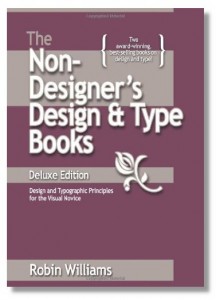

This book is an updated compilation of two of Williams’s previous books: The Non-Designer’s Design Book and, unsurprisingly, The Non-Designer’s Type Book. The first half is about design. Williams presents four fundamental layout concepts: Proximity, Alignment, Repetition, Contrast. (I list them in this order because PARC is a better acronym than the reverse.) Most of the rest of this part consists of elaborations and applications of these basics. Continue reading “The Non-Designer’s Design & Type Books — Robin Williams” →
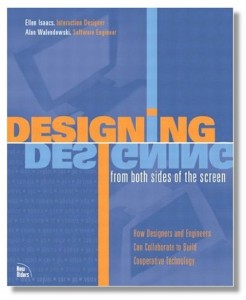
 How do you design interface elements that most users don’t use, but some users use all the time? And what about functions that are used by everybody, but only a few times? The answer depends on the context, but Ellen Isaacs and Alan Walendowski’s book Designing from Both Sides of the Screen has a useful set of guidelines. It’s a handy initial approximation to aid your design thinking.
 The title of this book describes the web application design strategy presented within. Hoekman calls it the
 This is a passionate polemic on the dark side of rampant software technology. But it also shows a way out, and that is (cue celestial choirs) Interaction Design.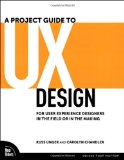
 This is an overview of the entire world of user experience (UX) design from the point of view of a dedicated UX practitioner. It covers the UX side of project management, client interaction, design, development, and testing. Despite the broad coverage, its focus on the practitioner means it goes into a bit more depth than many such books.
 This simple book is worth reading for its mindset rather than for any concrete ideas. Maeda gives ten “laws” of simplicity, but they’re really pretty arbitrary. The tenth law is just a slogan (although a good one), and there are three extra laws at the end. Clearly he was intent on having ten laws in his list.
 To mark